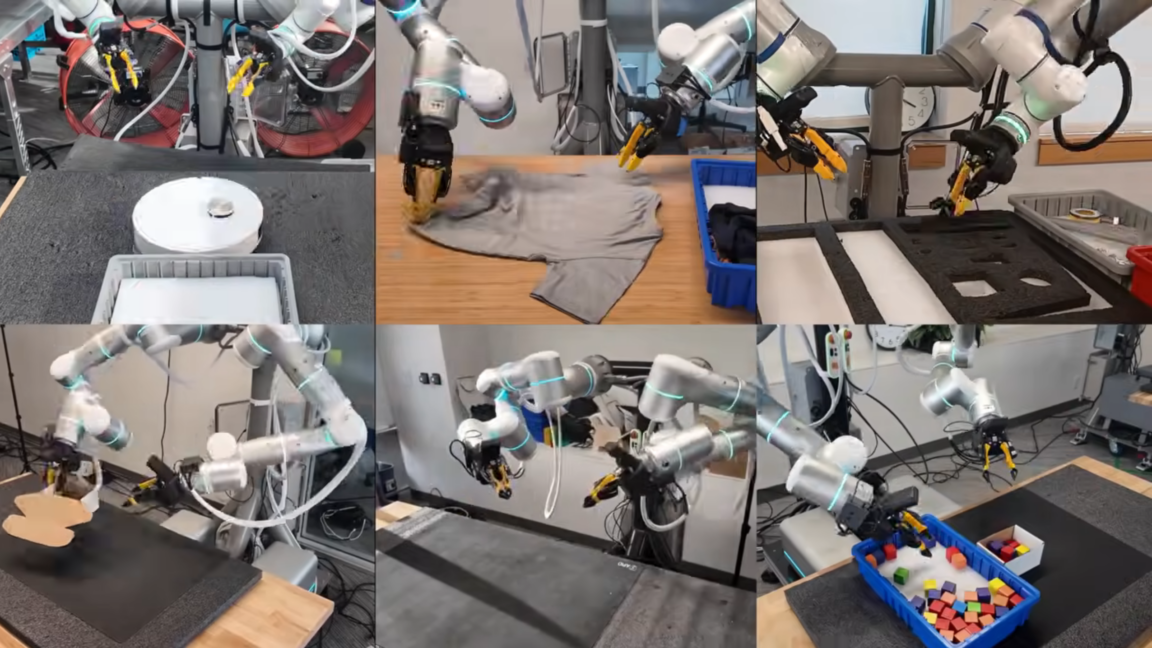
Neuro-symbolic AI Cuts Energy 100 : Change the Problem
If you tried to rebuild the Tufts experiment yourself, the first thing you’d notice is boring: the neuro-symbolic AI system spends most of its time not thinking. It doesn’t sample thousands of poss...

Source: DEV Community
If you tried to rebuild the Tufts experiment yourself, the first thing you’d notice is boring: the neuro-symbolic AI system spends most of its time not thinking. It doesn’t sample thousands of possible trajectories. It doesn’t keep a huge vision-language-action model hot on a GPU. It just runs a cheap symbolic planner over a tiny state graph, then calls a neural policy to execute each planned move. That’s the real story behind the “100× less energy” headline. The win isn’t magic; it’s shrinking the search space with explicit structure. TL;DR The Tufts team measured ~100× lower training energy and ~10× lower per-episode energy than VLA baselines on a simulated Towers-of-Hanoi-style robotics task. This result does not generalize to all AI; it generalizes to a design pattern: when tasks are structured, rule‑governed, and long‑horizon, symbolic scaffolding beats scaling end‑to‑end networks. If you’re building robots, agents, or edge systems, the move isn’t “bet on neurosymbolic as a tribe”